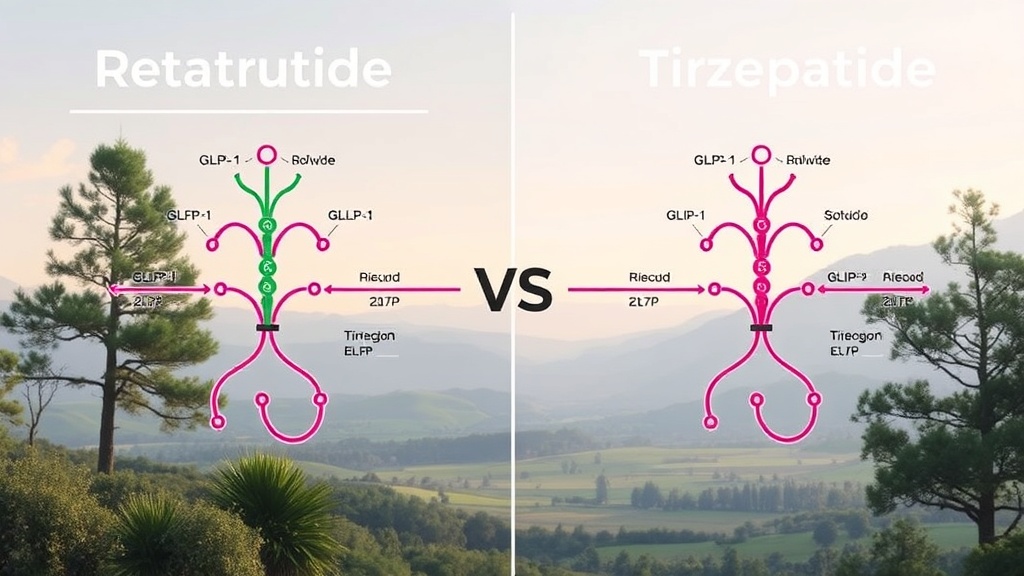
The incretin pharmacology research landscape has been transformed by multi-receptor agonist compounds. Researchers now have access to dual agonists (Tirzepatide 20mg) and triple agonists (Retatrutide 20mg / Retatrutide 10mg) that activate combinations of GIP, GLP-1, and glucagon receptors. Understanding the mechanistic distinctions between these compound classes is essential for rigorous metabolic research design.
The Incretin System: GIP and GLP-1 Receptor Biology
Incretins are gut-derived hormones that amplify insulin secretion in response to nutrient ingestion. GIP and GLP-1 act on their respective receptors on pancreatic beta-cells to produce glucose-dependent insulin secretion — stimulating insulin only when blood glucose is elevated, which is a key pharmacological safety property. The receptors differ in tissue expression: GLP-1R is expressed in pancreas, brain, gut, kidney, and heart; GIPR is expressed in pancreas, adipose tissue, bone, and brain. The rationale for dual agonism is that simultaneously activating both receptors produces additive or synergistic metabolic effects — a hypothesis strongly supported by clinical data from the tirzepatide SURPASS programme.
Tirzepatide: Dual GIP/GLP-1 Mechanism in Preclinical Research
Tirzepatide (CAS 2023788-19-2, MW 4,813.5 Da) is a C20 fatty diacid-conjugated peptide with albumin-binding properties extending its half-life to approximately 5 days in humans — relevant to animal model dosing interval design. Preclinical applications of Tirzepatide 20mg include: characterising synergistic incretin receptor signalling in cell-based assays; studying dose-response relationships for dual receptor engagement; investigating adipose tissue biology through GIPR-mediated pathways; and comparing dual vs single GLP-1R agonism in animal metabolic models.
Retatrutide: Adding Glucagon Receptor Co-Agonism
Retatrutide (LY3437943, CAS 2381089-83-2) extends the dual incretin concept by incorporating glucagon receptor (GCGR) agonism. Glucagon drives energy expenditure through hepatic glucose output, thermogenesis via brown adipose tissue, and lipolysis — mechanisms distinct from and potentially complementary to GLP-1R/GIPR-mediated effects. The research challenge: glucagon receptor activation raises blood glucose, potentially antagonising insulin-stimulating incretin effects. At appropriate activation ratios, researchers hypothesise glucagon’s energy expenditure benefits can be captured while hyperglycaemic effects are offset by concurrent incretin-stimulated insulin secretion. Investigating this receptor interaction balance is a primary objective of preclinical Retatrutide 10mg and Retatrutide 20mg research.
Designing Comparative Research Studies
For rigorous comparison of these compound classes, parallel dose-response characterisation for each compound across equivalent receptor engagement ranges is recommended. The availability of both 10mg and 20mg retatrutide formulations facilitates full dose-range investigation. Key comparative research questions include: relative contribution of each receptor to metabolic phenotype; role of glucagon co-agonism in energy expenditure vs glycaemic effects; and downstream metabolic signatures (gene expression, metabolomics) distinguishing triple from dual receptor engagement. Researchers may also incorporate Kisspeptin 5mg for metabolic-reproductive axis context in broader hormonal research designs.
All compounds mentioned are for laboratory research use only. Not for human or veterinary consumption.