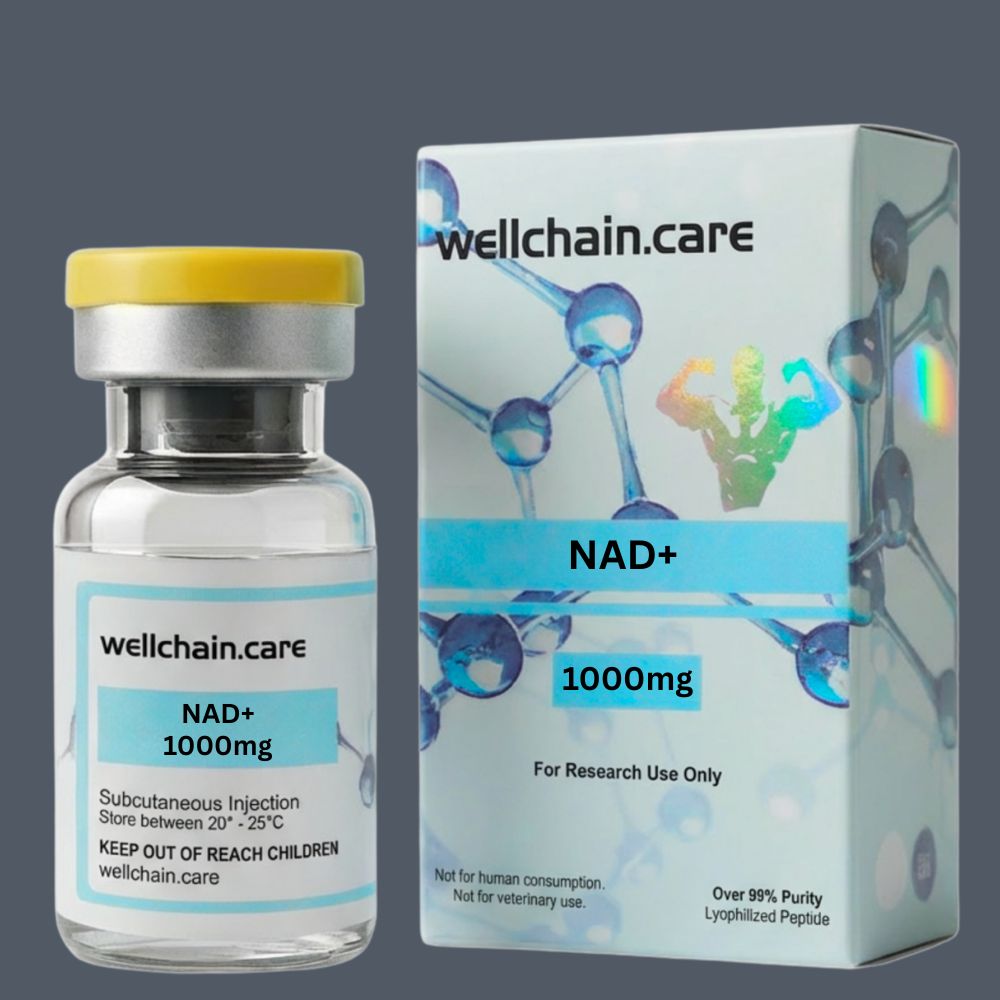
Nicotinamide Adenine Dinucleotide (NAD+) is a fundamental coenzyme present in all living cells. CAS: 53-84-9 | MW: 663.43 g/mol | Formula: C21H27N7O14P2. Supplied as a white crystalline powder at ≥99% purity for cellular metabolism, mitochondrial bioenergetics, and longevity research.
Research Background
NAD+ serves as both an electron carrier in metabolic redox reactions and a substrate for key regulatory enzymes. Research interest has surged since the discovery of NAD+-dependent sirtuins (SIRT1-7) and PARP enzymes. The observation that tissue NAD+ levels decline significantly with aging – documented in muscle, brain, and liver – has positioned NAD+ biology at the forefront of longevity research. Researchers have investigated NAD+ biosynthetic pathways and supplementation strategies in model organisms including C. elegans, yeast, mice, and rats.
Mechanism of Action & Research Applications
- Sirtuin activation: Sirtuins (SIRT1-7) are NAD+-dependent deacylases regulating gene expression, DNA repair, mitochondrial biogenesis (SIRT1/SIRT3), and metabolic adaptation. NAD+ availability is rate-limiting for sirtuin activity.
- PARP-mediated DNA repair: PARP-1 consumes NAD+ to synthesise poly-ADP-ribose chains in response to DNA strand breaks, linking NAD+ levels to DNA damage response capacity.
- Mitochondrial electron transport: NADH (reduced NAD+) is the primary electron donor to Complex I, directly coupling NAD+/NADH ratios to oxidative phosphorylation efficiency.
- CD38 biology: The ectoenzyme CD38 is a major NAD+ consumer whose expression increases with aging – a key target in NAD+ homeostasis research.
Storage & Handling
- Long-term storage: -20°C, desiccated; NAD+ is hygroscopic and degrades if exposed to moisture
- Short-term storage: 2-8°C for up to 2 weeks in solution; prepare fresh when possible
- Reconstitution: Dissolve in sterile water or buffer; adjust pH to 7-8 if needed
- Handling: Work quickly in dry conditions; aliquot dry powder for single-use quantities; NAD+ solutions degrade faster at acidic pH or elevated temperature
Related Research Compounds
NAD+ research is closely connected to: SS-31 10mg (mitochondria-targeted peptide), MOTS-C 40mg (AMPK activator), 5-Amino-1MQ 10mg (NNMT inhibitor that increases NAD+ availability), and Epithalon 10mg for broader longevity pathway research.
Frequently Asked Questions
Q: What is NAD+?
A: NAD+ (Nicotinamide Adenine Dinucleotide, CAS 53-84-9, MW 663.43 g/mol) is a coenzyme found in all living cells serving as electron carrier and substrate for sirtuins and PARPs. Supplied for laboratory research use only.
Q: How is NAD+ typically used in research?
A: Used in cell culture experiments to study mitochondrial bioenergetics, sirtuin activation, PARP-mediated DNA repair, and age-related metabolic changes in NAD+-dependent enzymatic pathway investigations.
Q: What is the storage recommendation for NAD+?
A: -20°C desiccated. Hygroscopic – sensitive to moisture. Aliquot dry powder. Working solutions: 2-8°C, prepare fresh when feasible.
Q: What form and purity is NAD+ supplied in?
A: White crystalline powder at ≥99% purity, suitable for high-precision biochemical research. 500mg per unit.
For research use only. Not for human or animal consumption. Not a medicinal product.
Reviews
There are no reviews yet.