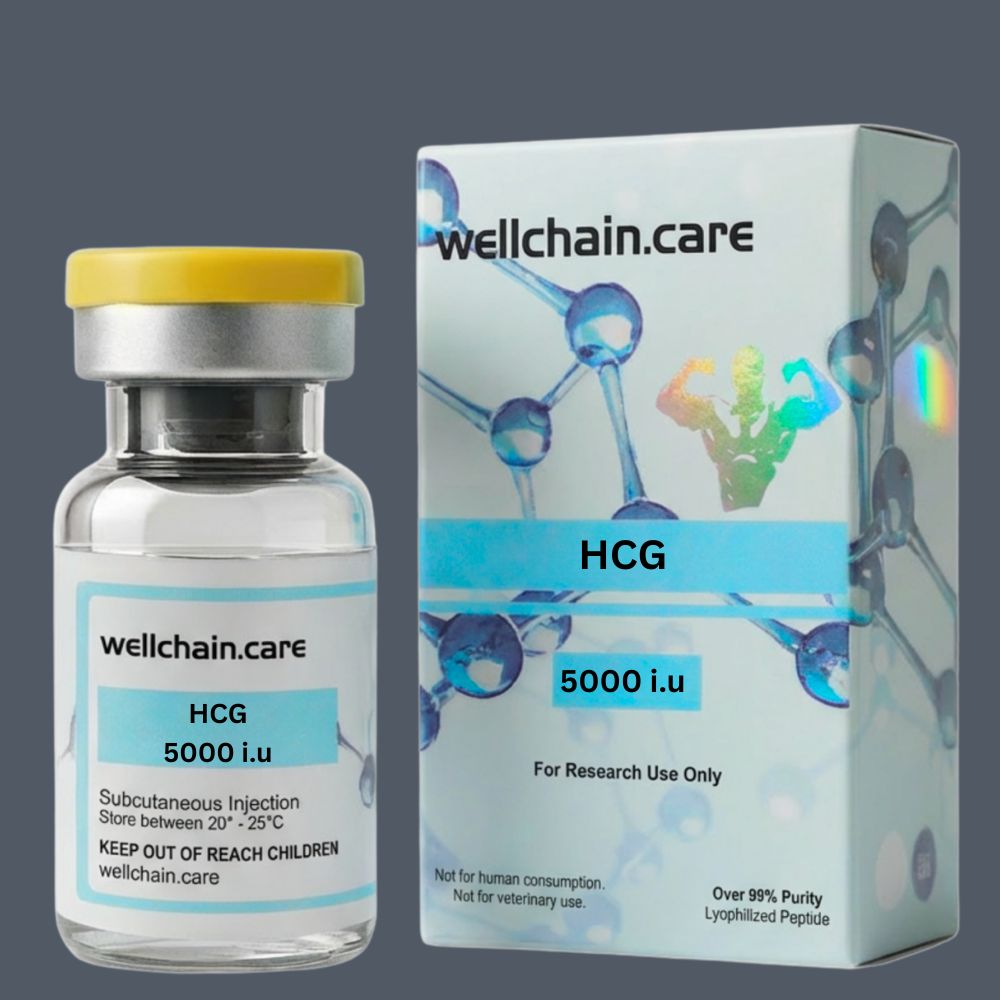
Human Chorionic Gonadotropin (HCG) is a glycoprotein hormone sharing the LH/CG receptor (LHCGR) with luteinizing hormone. CAS: 9002-61-3 | MW: ~36-40 kDa (glycoprotein) | Half-life: ~24-36 hours. Consists of a common alpha-subunit (shared with LH, FSH, TSH) and a specific beta-subunit. Supplied as lyophilised powder with sterile diluent.
Research Background
HCG maintains the corpus luteum during early pregnancy through continuous LH-like stimulation of progesterone production. In research, HCG serves as a surrogate LH receptor agonist due to its high-affinity LHCGR binding and extended half-life (~24-36 hours for HCG vs ~20 minutes for LH). This extended half-life makes HCG a practical tool for studying sustained LH receptor activation, Leydig cell function, steroidogenesis, and gonadal biology without rapid compound degradation confounds.
Mechanism of Action & Research Applications
HCG activates LHCGR (a Gs-coupled GPCR), triggering adenylyl cyclase activation, cAMP elevation, and PKA pathway signalling. Primary applications: Leydig cell steroidogenesis studies; granulosa/luteal cell progesterone production; ovulation induction models; testicular descent and cryptorchidism research; LHCGR pharmacology and signalling cascade studies.
Storage & Handling
- Long-term storage: -20°C (lyophilised stable 24+ months)
- Short-term storage: 2-8°C after reconstitution; use within 30 days
- Reconstitution: Use provided sterile diluent or bacteriostatic water
- Handling: Glycoprotein – do not vortex; swirl gently; aliquot; maintain cold chain integrity
Related Research Compounds
HCG is frequently studied alongside Kisspeptin 5mg (upstream HPG axis regulator), Tirzepatide 20mg for metabolic-hormonal interactions, and HGH 10 IU for pituitary hormone axis research.
For research use only. Not for human or animal consumption. Not a medicinal product.
Reviews
There are no reviews yet.