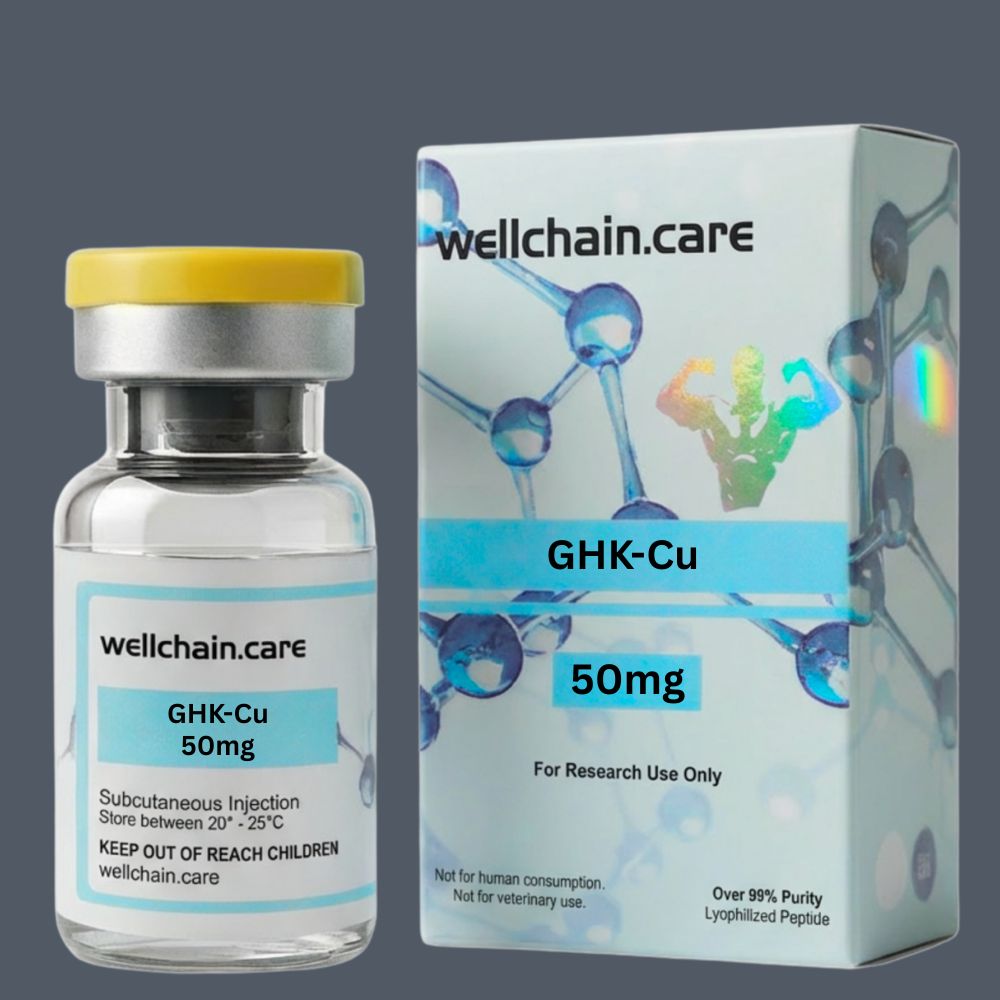
GHK-Cu is a naturally occurring copper-binding tripeptide complex (Gly-His-Lys·Cu2+) first isolated from human plasma by Loren Pickart in 1973. CAS: 49557-75-7 (GHK) / 89030-95-5 (Cu complex) | MW: ~403.93 g/mol (Cu complex). Supplied as a blue-tinged lyophilised powder at ≥99% purity (HPLC-verified).
Research Background
GHK-Cu was first identified for liver cell stimulating activity, but subsequent research revealed a broad biological profile in preclinical models spanning fibroblast activation, ECM remodelling, and antioxidant regulation. Plasma GHK-Cu levels decline with advancing age. The copper coordination complex is essential to biological activity. Over 4,000 genes have been identified as differentially regulated by GHK-Cu in human cell models, suggesting broad transcriptional activity.
Mechanism of Action & Research Applications
GHK-Cu research has documented: fibroblast activation and stimulation of collagen type I/III, elastin, and glycosaminoglycan synthesis; modulation of MMP/TIMP balance in ECM remodelling; upregulation of antioxidant enzymes (superoxide dismutase, catalase); interaction with TGF-beta signalling pathway; and broad transcriptional regulatory activity. The compound serves as a productive model for studying copper-dependent biology in connective tissue.
Storage & Handling
- Long-term storage: -20°C (lyophilised powder stable for 24+ months)
- Short-term storage: 2-8°C in amber vials after reconstitution (copper complex is light-sensitive)
- Reconstitution: Dissolve in sterile water or PBS; blue colour indicates proper copper complexation
- Handling: Avoid chelating agents (EDTA, EGTA); protect from UV light
Related Research Compounds
GHK-Cu is frequently studied alongside BPC-157 10mg, TB-500 10mg, and the specialty blend Glow Blend 70mg which incorporates GHK-Cu alongside complementary compounds.
For research use only. Not for human or animal consumption. Not a medicinal product.
Reviews
There are no reviews yet.