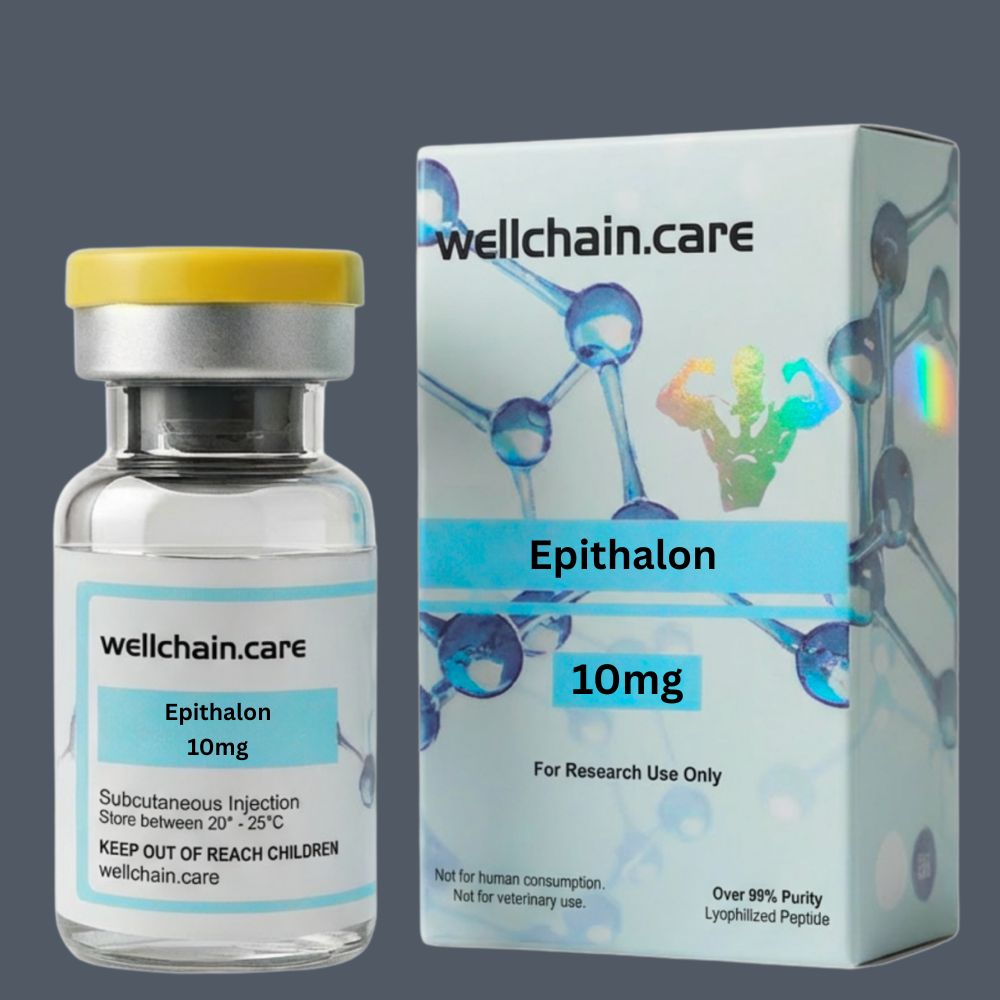
Epithalon (Epitalon) is a synthetic tetrapeptide (Ala-Glu-Asp-Gly) derived from Epithalamin, a polypeptide extract of the pineal gland, studied extensively by Professor Vladimir Khavinson and colleagues. CAS: 307297-39-8 | MW: 390.35 g/mol | Formula: C14H22N4O9. Supplied as a white lyophilised powder at ≥99% purity (HPLC-verified) for telomere biology and longevity research.
Research Background
Epithalon research has a distinctive history rooted in Russian biogerontology, where it was studied as part of a programme investigating peptide bioregulators derived from organ extracts. The pineal gland origin connects Epithalon to neuroendocrine regulation of aging. Decades of research – increasingly translated into international publications – document preclinical observations in rodent aging models. The compound’s apparent ability to activate telomerase has made it of particular interest to longevity researchers.
Mechanism of Action & Research Applications
- Telomerase activation: Studies document Epithalon’s ability to induce telomerase expression in somatic cells including human fibroblasts in vitro, suggesting a role in telomere length maintenance biology
- Neuroendocrine regulation: Effects on the pineal-hypothalamic axis and melatonin secretion patterns in animal aging models
- Antioxidant enzyme modulation: Superoxide dismutase and catalase activity documented in research
- DNA repair: Investigations in aging cellular models
- Circadian rhythm: Normalisation of circadian disruption in aged rodent models
Storage & Handling
- Long-term storage: -20°C (lyophilised stable 24+ months)
- Short-term storage: 2-8°C for up to 4 weeks after reconstitution
- Reconstitution: Sterile water or physiological saline; tetrapeptide dissolves readily
- Handling: Standard peptide handling; aliquot; protect from light
Related Research Compounds
Longevity research panel: NAD+ 500mg, SS-31 10mg, and MOTS-C 40mg.
For research use only. Not for human or animal consumption. Not a medicinal product.
Reviews
There are no reviews yet.