GHK-Cu (Glycyl-L-Histidyl-L-Lysine copper complex) is a naturally occurring tripeptide-copper complex first isolated from human plasma albumin by Loren Pickart in 1973. Originally identified as a peptide that promoted the growth of hepatocytes in a liver regeneration bioassay, GHK-Cu has since been studied across a remarkably diverse range of biological research areas, from wound healing and tissue regeneration to gene expression regulation and antioxidant biology. The GHK-Cu peptide copper-binding tripeptide research literature now spans decades and encompasses hundreds of peer-reviewed publications.
GHK-Cu Chemistry and Copper-Binding Properties
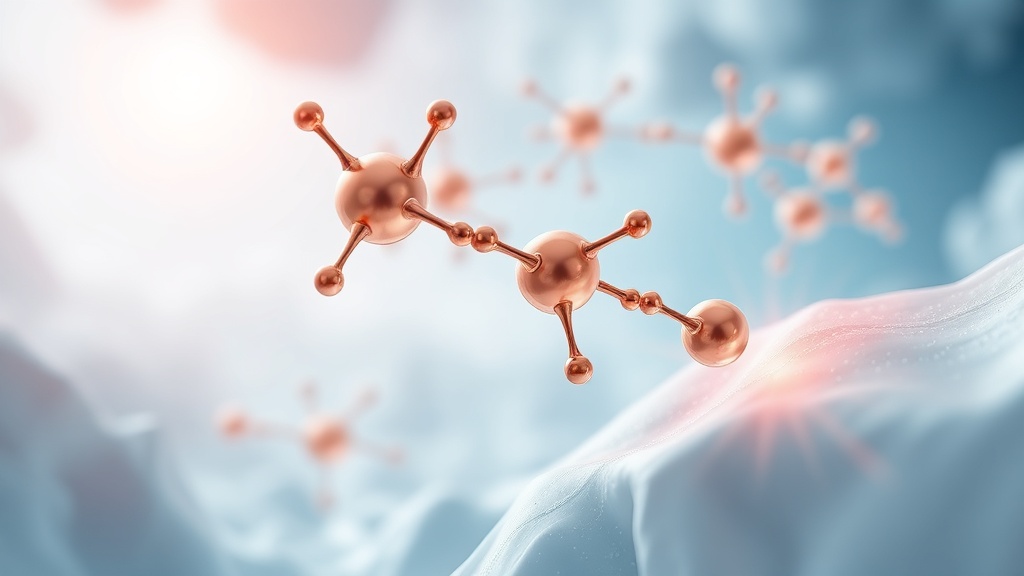
The biological activity of GHK-Cu is intrinsically linked to its ability to form a stable square-planar coordination complex with copper(II) ions. The histidine imidazole nitrogen, the glycine alpha-amino group, and the deprotonated amide nitrogen of the glycine-histidine peptide bond collectively provide the coordination sites that chelate Cu(II) with high affinity (log K ≈ 16.4). This copper-chelating architecture allows GHK to act as a copper transporter in biological systems, facilitating copper delivery to copper-dependent enzymes while preventing the free radical-generating reactions associated with unbound ionic copper.
Research has demonstrated that the copper component is essential for many of GHK-Cu’s biological activities. Studies comparing GHK (without copper) to GHK-Cu (copper-complexed) in fibroblast culture experiments have shown that several anabolic effects on collagen synthesis and cell migration require the intact copper complex rather than the peptide alone, suggesting that copper delivery to copper-dependent enzymes — including lysyl oxidase (involved in collagen and elastin cross-linking) and cytochrome c oxidase (Complex IV of the mitochondrial ETC) — may mediate some of the peptide’s observed biological activities in research models.
Fibroblast Biology and Extracellular Matrix Research
The most thoroughly characterised aspect of GHK-Cu research involves its effects on dermal fibroblast biology and extracellular matrix (ECM) component synthesis. Cell culture studies across multiple independent research groups have documented GHK-Cu’s stimulatory effects on fibroblast proliferation, migration into wound sites in scratch assays, and synthesis of key ECM molecules including collagen types I and III, fibronectin, and decorin. These findings have been supported by Northern blot and RT-PCR analyses showing upregulation of collagen mRNA transcripts in GHK-Cu-treated fibroblast cultures.
Equally important from an ECM remodelling perspective are GHK-Cu’s reported effects on the matrix metalloproteinase (MMP) system. Research has documented complex, context-dependent effects on MMP expression: GHK-Cu appears to upregulate certain MMPs associated with ECM remodelling (including MMP-1 and MMP-2) while simultaneously increasing expression of tissue inhibitors of metalloproteinases (TIMP-1 and TIMP-2), potentially facilitating a balanced remodelling response rather than uncontrolled ECM degradation. This regulatory profile has made GHK-Cu a useful tool compound for studying fibroblast-driven ECM remodelling mechanisms in wound healing research models.
Gene Expression Analysis and Broader Biological Research
Perhaps the most striking finding in contemporary GHK-Cu research came from large-scale gene expression analyses using DNA microarrays and RNA sequencing approaches. Research published by Pickart and colleagues used genome-wide expression profiling in cell lines treated with GHK-Cu to identify transcriptome-wide effects, identifying hundreds of genes differentially regulated by GHK-Cu treatment. These analyses revealed GHK-Cu-associated gene expression changes spanning tissue remodelling, inflammation resolution, anti-oxidant defense, DNA damage repair, and even neurological gene networks — suggesting that the tripeptide may act on broad transcriptional regulatory pathways rather than through a single receptor.
TGF-β pathway research has identified GHK-Cu as a modulator of TGF-β1 and TGF-β2 signalling in fibroblast models, with GHK-Cu treatment reducing the expression of pro-fibrotic TGF-β isoforms while preserving or upregulating anti-inflammatory TGF-β3, potentially connecting the peptide to research on fibrosis biology. Anti-inflammatory research has additionally documented GHK-Cu-associated reductions in TNF-α-stimulated inflammatory gene expression in macrophage models.
Wellchain.care supplies GHK-Cu 50mg for research use. Researchers investigating related tissue repair compounds may also be interested in BPC-157 10mg for angiogenesis and multi-tissue wound healing research, and TB-500 10mg for actin dynamics and cell migration research applications.
All compounds are supplied for research use only. Not for human consumption.